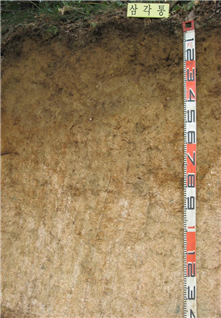
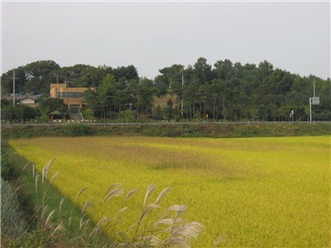
Morphological properties of typifying pedon.
|
|
SAMGAG SERIES |
Established Series UKT, JFD 20 November, 1969 |
The Samgag series are members of the coarse loamy, mixed, mesic family of Typic Dystudepts [Haplic Cambisols (Alumic Dystric Chromic) classified by WRB]. These soils have yellowish brown sandy loam A horizons, yellowish brown sandy loam BA horizons, strong brown sandy loam Bw horizons, reddish yellow sandy loam C1 horizons, and strongly weathered brownish yellow loamy sand saprolites. They are developed in mountainous areas in residuum derived from granitic materials.
Typifying pedon: Samgag sandy loam-pine forest (Colors are for moist soil).
Slope: 30-60%
Elevation: 100 m above m.s.l.
Soil moisture regime: Udic
Soil temperature regime: Mesic
Parent material: Residuum on granite
Diagnostic features : An ochric epipedon from a depth of 0 to 15 cm and a cambic horizon from a depth of 32 to 50 cm (A cambic horizon from a depth of 32 to 50 cm by WRB).
Described by: Song, K. C., S. J. Jung, and D. C. Noh, 25 Sep., 2009.
|
|
|
|
|
Morphological properties of typifying pedon. |
||
A - 0 to 15 cm. Yellowish brown (10YR 5/4) sandy loam; weak fine to medium granular structure; slightly firm, slightly sticky and slightly plastic; many fine to medium roots; common fine pores; clear smooth boundary.
BA - 15 to 32 cm. Yellowish brown (10YR 5/6) sandy loam; moderate fine to medium subangular blocky structure; friable, slightly sticky and slightly plastic; many fine to medium roots; common fine to medium pores; clear smooth boundary.
Bw - 32 to 50 cm. Strong brown (10YR 5/6) sandy loam; weak fine to medium subangular blocky structure; friable, slightly sticky and slightly plastic; common fine to medium roots; common fine to medium pores; clear smooth boundary.
C1 - 50 to 78 cm. Reddish yellow (7.5YR 6/6) sandy loam; structureless, massive; firm, non sticky and non plastic; few fine to medium roots; no pores.
C2 - 78 to 180 cm. Granite saprolites.
The typifying pedon has an ochric epipedon from a depth of 0 to 15 cm, a cambic horizon from a depth of 32 to 50 cm. That can be classified as Inceptisol. It has an udic soil moisture regime and keys out as Udept. Also it meets the requirements of Typic Dystrudept. The typifying pedon has coarse loamy particle-size class and mesic soil temperature class. Therefore it can be classified as coarse loamy, mixed, mesic family of Typic Dystrudept.
Type Location: About 10 meters north of the Yeoju Yugmyojang, Yeondae Ri, Ganam Myeon, Yeoju city, Gyeonggi Do (127o 36' 36.5'', 37o 11' 17.9'').
Range in Characteristics: These soils have ochric epipedons and cambic horizons. Solum thickness ranges from 50 to 100 cm. Depth to hard rock is more than 2 meters. Base saturation is commonly low. Reaction is very strongly to medium acid. A horizons are brown, yellowish brown, or pale brown sandy loam. The cambic B horizons are reddish yellow, light brown, strong brown, brown, or yellowish brown sandy loam. C horizons are pale brown, light brown, or light yellowish brown sandy loam or strongly weathered residual granitic saprolites.
Competing Series and Their Differentiae: These are the Woljeong, Gwanag, Yesan, Mudeung, and Dosan series. The Woljeong soils have umbric epipedons. The Gwanag soils have hard bedrock within 50 cm of the surface. The Yesan soils have red soil color. The Mudeung soils have fine loamy textures and hard bedrock within 50 cm of the surface. The Dosan soils have sandy family textures and coarse grained granitic parent materials.
Setting: The Samgag soils occur on mountainous areas of granitic geology and very thick saprolites. Slopes range from 7 to 100 percent and 30 to 60 percent slopes are dominant.
Principal Associated Soils: The Songjeong, Jeonnam, Dalcheon, and Dosan soils are associated with the Samgag soils on similar parent materials in upland positions. The Samgag and Dosan soils generally occupy the more exposed, eroded, and steeper landscape positions.
Drainage and Permeability: Somewhat excessively drained. Permeability is moderately rapid. Runoff is rapid or very rapid.
Use and Vegetation: Most of these soils grow pine forest.
Distribution and Extent: The Samgag soils are of large extent and are distributed throughout the country in mountaineous areas over deeply weathered granite parent materials.
Series Established: Gwangju city, 1967. Revised, Yeoju city, Gyeonggi Do, 2009.
Laboratory data sheets of typifying pedon.
|
Depth (cm) |
Horizon |
( --- Total ---) |
(-- Clay --) |
(-- Silt --) |
(------- Sand -------) |
||||||||
|
Clay |
Silt |
Sand |
Fine |
Coarse |
Fine |
Coarse |
VF |
F |
M |
C |
VC |
||
|
LT |
.002 |
.05 |
LT |
LT |
.002 |
.02 |
.05 |
.10 |
.25 |
.5 |
1 |
||
|
.002 |
- .05 |
- 2 |
.0002 |
.002 |
- .02 |
- .05 |
- .10 |
- .25 |
- .50 |
- 1 |
- 2 |
||
|
- - - - - - - - - - - Pct of ˂ 2mm (3A1) - - - - - - - - - - - |
|||||||||||||
|
0-15 |
Ap |
7.2 |
24.0 |
68.8 |
|
|
11.9 |
12.0 |
7.7 |
7.7 |
12.9 |
19.2 |
17.3 |
|
15-32 |
BA |
7.2 |
22.4 |
70.4 |
|
|
10.3 |
12.1 |
4.3 |
4.3 |
13.0 |
21.1 |
21.3 |
|
32-50 |
Bw1 |
8.0 |
28.0 |
64.0 |
|
|
13.1 |
14.8 |
8.0 |
8.0 |
12.8 |
15.4 |
16.2 |
|
50-78 |
Bw2 |
11.7 |
27.6 |
60.7 |
|
|
12.4 |
15.2 |
6.7 |
6.7 |
12.9 |
14.2 |
15.0 |
|
78-180 |
C |
13.6 |
22.6 |
63.8 |
|
|
7.2 |
15.4 |
7.7 |
7.7 |
13.7 |
16.8 |
12.0 |
|
Depth (cm) |
Coarse Fractions(mm) |
˃2mm |
Orgn |
Total |
Extr |
Total |
(-- Dith -Cit --) |
|||||
|
Weight |
Wt |
C |
N |
P |
S |
Extractable |
||||||
|
2-5 |
5-20 |
20-75 |
.1-75 |
Pct of |
|
|
|
|
Fe |
Al |
Mn |
|
|
|
|
|
|
Whole |
6A1c |
6B3a |
6S3 |
6R3a |
6C2b |
6G7a |
6D2a |
|
|
Pct of ˂ 75mm (3B1) |
Soil |
Pct ˂ 2mm |
g/kg |
Pct of ˂ 2mm |
||||||||
|
0-15 |
|
|
|
|
|
1.42 |
|
|
|
|
|
|
|
15-32 |
|
|
|
|
|
1.51 |
|
|
|
|
|
|
|
32-50 |
|
|
|
|
|
0.95 |
|
|
|
|
|
|
|
50-78 |
|
|
|
|
|
0.99 |
|
|
|
|
|
|
|
78-180 |
|
|
|
|
|
0.59 |
|
|
|
|
|
|
|
Depth (cm) |
Ratio/Clay |
Atterberg |
( Bulk Density ) |
COLE |
(- Water Content -) |
WRD |
|||||||
|
CEC |
1500 |
Limits |
Field |
33 |
Oven |
Whole |
Field |
10 |
33 |
1500 |
Whole |
||
|
|
kPa |
LL |
PI |
Moist |
kPa |
Dry |
Soil |
Moist |
kPa |
kPa |
kPa |
Soil |
|
|
8D1 |
8D1 |
4P1 |
4P |
4A3a |
4A1d |
4A1h |
4D1 |
4B4 |
4B1c |
4B1c |
4B2a |
4C1 |
|
|
|
|
Pct ˂0.4mm |
- - g/cc - - |
cm/cm |
-- Pct of ˂2mm -- |
cm/cm |
|||||||
|
0-15 |
0.99 |
|
|
|
1.11 |
|
|
|
6.9 |
|
|
|
|
|
15-32 |
0.61 |
|
|
|
1.22 |
|
|
|
4.5 |
|
|
|
|
|
32-50 |
0.67 |
|
|
|
1.25 |
|
|
|
5.6 |
|
|
|
|
|
50-78 |
0.57 |
|
|
|
1.34 |
|
|
|
6.7 |
|
|
|
|
|
78-180 |
0.55 |
|
|
|
|
|
|
|
|
|
|
|
|
|
Depth (cm) |
( NH4OAc Extractable Bases ) |
Acid- |
Extr |
(----- CEC -----) |
Al |
||||||
|
Ca |
Mg |
K |
Na |
Sum |
ity |
Al |
Sum |
NH4- |
Bases |
Sat |
|
|
5B5a |
5B5a |
5B5a |
5B5a |
Bases |
|
|
Cats |
OAc |
+ Al |
|
|
|
6N2e |
6O2d |
6Q2b |
6P2b |
|
6H5a |
6G9a |
5A3a |
5A8b |
5A3b |
5G1 |
|
|
- - - - - - - - - - - - meq / 100g - - - - - - - - - - - - |
Pct |
||||||||||
|
0-15 |
2.4 |
0.6 |
0.2 |
0.1 |
3.3 |
12.6 |
4.0 |
15.8 |
7.1 |
7.3 |
55.3 |
|
15-32 |
1.1 |
0.4 |
0.2 |
0.1 |
1.8 |
11.1 |
3.5 |
12.9 |
4.4 |
5.3 |
66.0 |
|
32-50 |
0.1 |
0.1 |
0.2 |
0 |
0.5 |
11.3 |
3.9 |
11.8 |
5.4 |
4.4 |
88.2 |
|
50-78 |
0.2 |
0.1 |
0.3 |
0 |
0.7 |
9.9 |
1.6 |
10.6 |
6.7 |
2.3 |
70.5 |
|
78-180 |
0.1 |
0.1 |
0.2 |
0 |
0.4 |
9.3 |
0.7 |
9.7 |
7.5 |
1.1 |
60.8 |
|
Depth (cm) |
(Base Sat) |
CO3 as |
Res |
Cond |
(------ pH ------) |
Acid Oxalate Extraction |
|||||||
|
Sum |
NH4- |
CaCO3 |
|
|
NaF |
KCl |
CaCl2 |
H2O |
Opt |
Al |
Fe |
Si |
|
|
|
OAc |
˂2mm |
|
|
|
|
.01M |
|
Den |
|
|
|
|
|
5C3 |
5C1 |
6E1g |
8E1 |
8I |
8C1d |
|
8C1f |
8C1f |
8J |
6G12 |
6C9a |
6V2 |
|
|
---- Pct ---- |
ohms/cm |
dS/m |
|
1: 1 |
1: 2 |
1: 1 |
|
- Pct of ˂2mm - |
|||||
|
0-15 |
20.6 |
45.8 |
|
|
|
|
3.6 |
4.1 |
4.7 |
|
|
|
|
|
15-32 |
14.0 |
40.9 |
|
|
|
|
4.0 |
4.4 |
4.9 |
|
|
|
|
|
32-50 |
4.4 |
9.5 |
|
|
|
|
3.9 |
4.3 |
5.1 |
|
|
|
|
|
50-78 |
6.3 |
9.9 |
|
|
|
|
3.7 |
4.6 |
5.4 |
|
|
|
|
|
78-180 |
4.6 |
5.9 |
|
|
|
|
3.9 |
5.0 |
5.6 |
|
|
|
|


